




Samsung Galaxy Fit 3
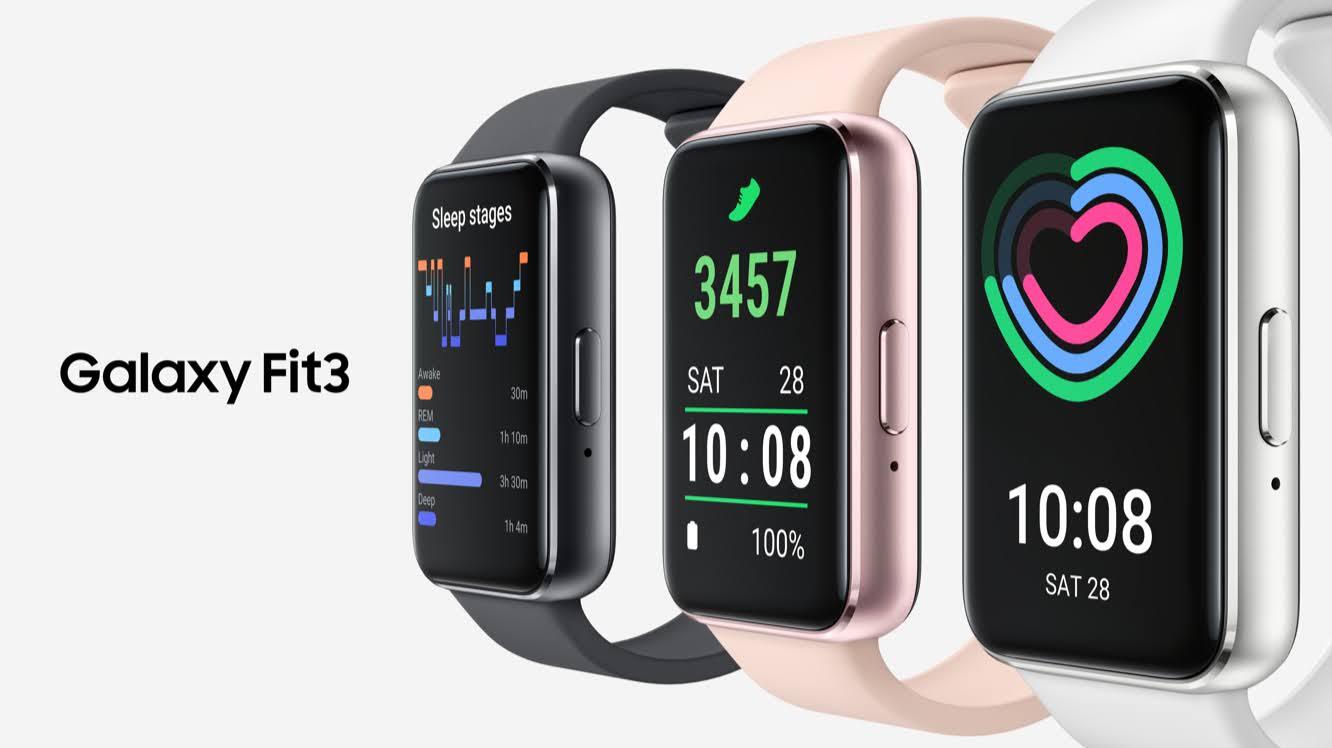
Samsung Galaxy Fit 3 is a budget-friendly fitness tracker released globally in early 2024 and launched in the US in January 2025. It offers a sleek, lightweight design with solid health and activity tracking for casual users, especially those in the Samsung ecosystem.
Key Specifications
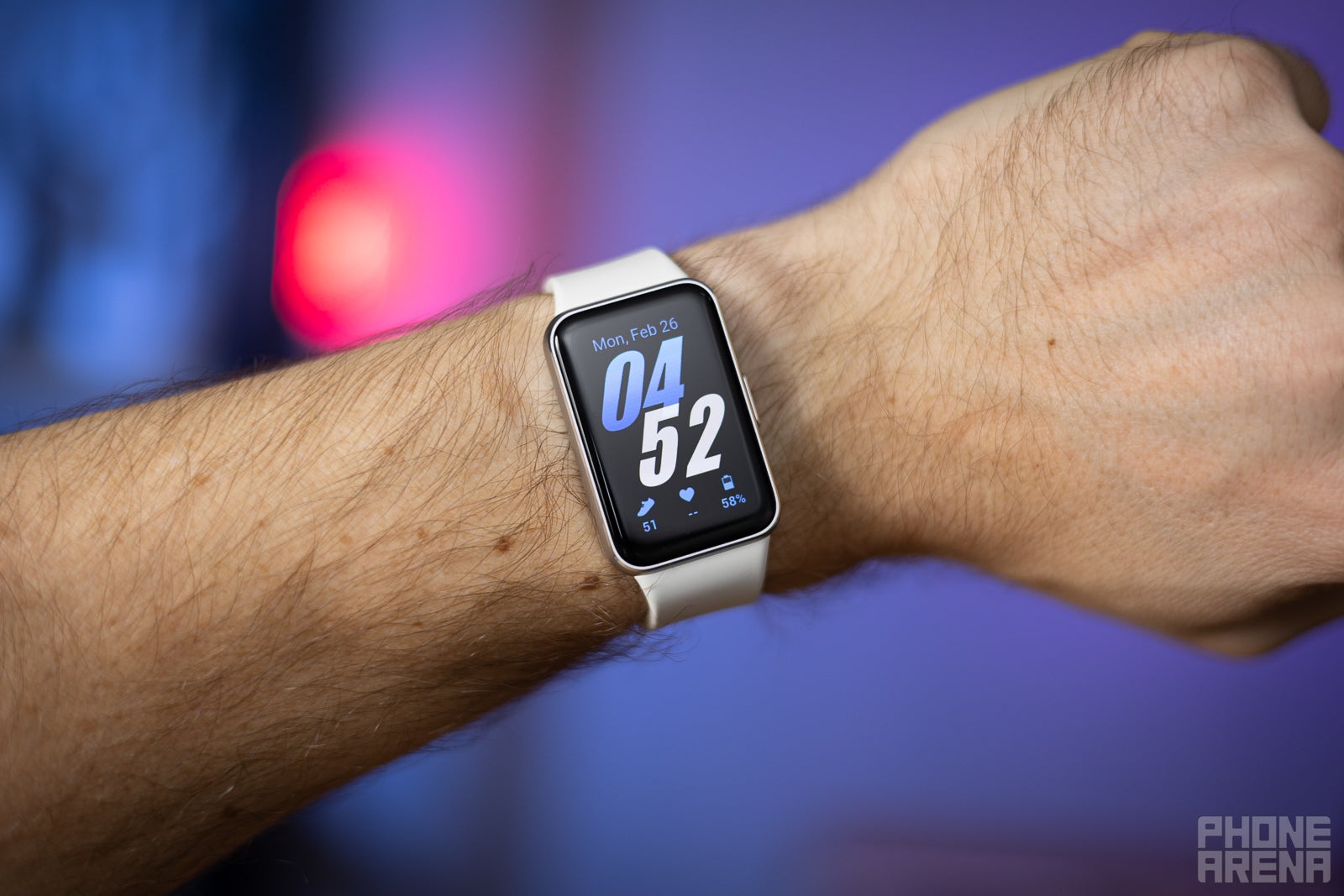
- Display: 1.6-inch AMOLED (256 x 402 resolution), with always-on option
- Body: Aluminum frame, weighs about 18.5g (body only; ~36g with band)
- Battery: 208 mAh, up to 13 days (typical use without AOD), ~7-10 days with heavier use or AOD enabled
- Water/Dust Resistance: 5ATM (swim-proof) + IP68
- Sensors: Optical heart rate, accelerometer, gyroscope, barometer, light sensor (supports SpO2, stress, fall detection)
- Connectivity: Bluetooth 5.3, compatible with Android 10+ (best with Samsung phones; no iOS support)
Main Features
- Tracks over 100 workout modes (auto-detects some like running, swimming, rowing)
- Sleep tracking with stages, coaching, SpO2, and snoring detection (snoring requires a nearby Samsung phone)
- Daily activity: Steps, heart rate (with alerts), stress, blood oxygen
- Safety: Fall detection, Emergency SOS
- Smart features: Notifications, quick replies, media control, camera remote (on Samsung phones), Find My Phone
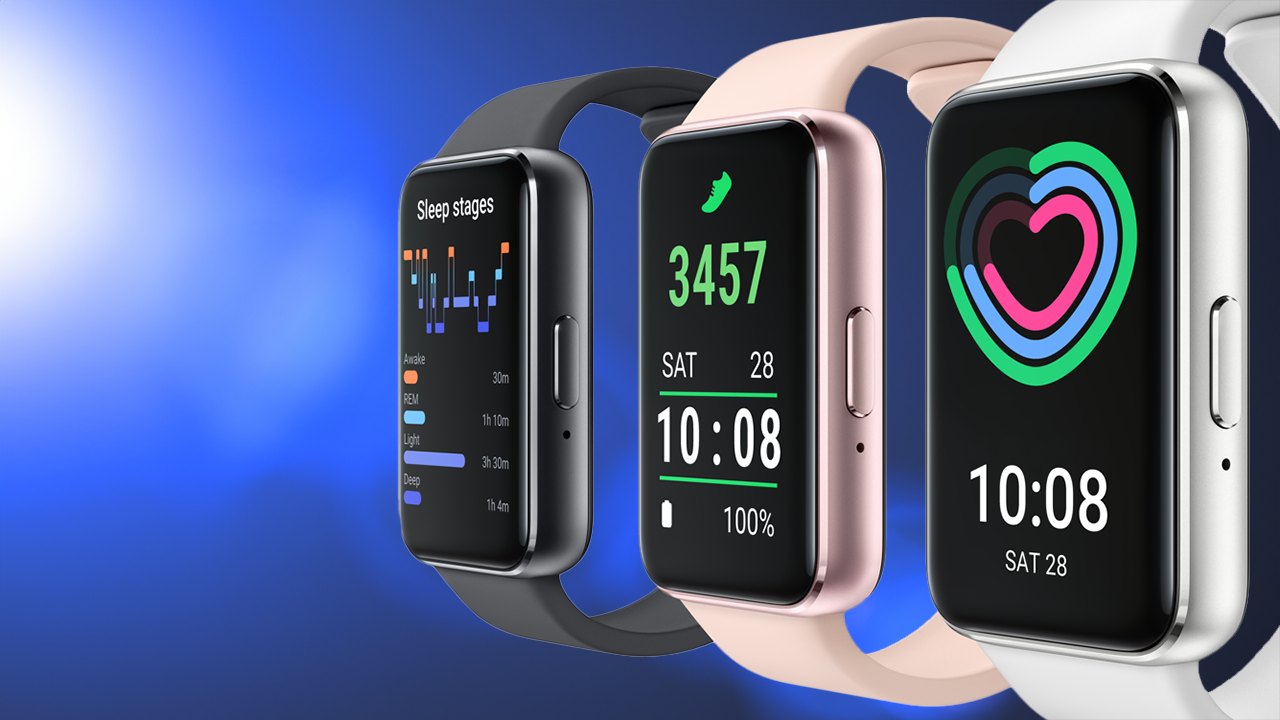
- Over 100 watch faces, customizable bands



-
Pros and Cons (Based on 2025 Reviews)
Pros:
- Excellent battery life compared to full smartwatches
- Bright, responsive AMOLED screen
- Comfortable for all-day/all-night wear (great as a sleep tracker alongside a Galaxy Watch)
- Accurate heart rate and workout tracking for casual use
- Affordable and integrates seamlessly with Samsung Health app
Cons:
-
- No built-in GPS (uses phone’s for outdoor routes)
- Sleep/step tracking can be inconsistent for some users (though firmware updates in 2025 improved stability)
- Limited advanced features (no ECG, body composition, or Energy Score like newer Galaxy Watches/Rings)
- Best experience on Samsung phones; works on other Android but misses some extras


