-
DJI Mic 3 Wireless Microphone
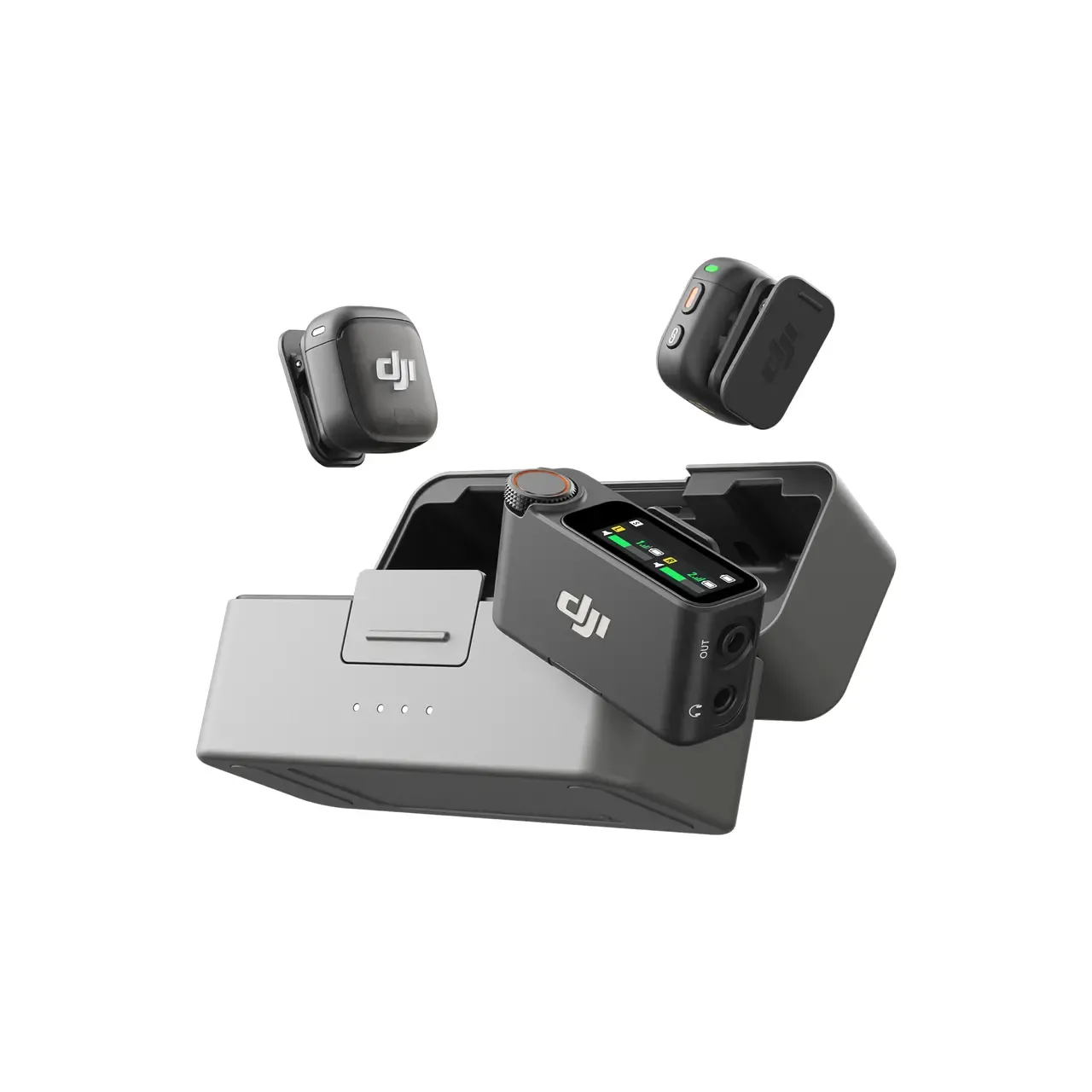
The DJI Mic 3 is DJI’s latest compact wireless lavalier microphone system, launched on August 28, 2025, as an evolution of the Mic 2 and Mic Mini. It combines portability with pro-grade features like 32-bit float recording, adaptive gain, and multi-channel support, making it ideal for vloggers, filmmakers, podcasters, and streamers. Available in 1-TX or 2-TX kits (with optional charging case), it’s smaller than the Mic 2 (16g per transmitter) while offering up to 4 transmitters and 8 receivers simultaneously for group recordings. Priced starting at $99 for the single TX, it’s designed for seamless integration with DJI’s Osmo ecosystem (e.g., Pocket 3, Action 5 Pro) and smartphones via Bluetooth or wired adapters.
Key Features
- Audio Quality and Recording: Omnidirectional mics with 32-bit float internal recording (up to 14 hours on 32GB storage) to prevent clipping; two-level noise cancellation; adaptive gain control for balanced volume in varying environments; three voice tone presets (e.g., for interviews or narration). Supports stereo/mono/safety track (-6dB) and integrated timecode for easy syncing in post.
- Connectivity: Dual-band 2.4 GHz wireless (up to 1,312 ft/400m range) with anti-interference; Bluetooth 5.4 for direct smartphone pairing (one TX at a time); 3.5mm TRS output on receiver, USB-C/Lightning adapters for cameras/phones; no 3.5mm input on TX (no external lav mics).
- Design and Controls: Ultralight magnetic transmitters with rotatable clips for optimal mic positioning; AMOLED touchscreen on receiver with dial for quick adjustments (mute, volume, channel switching); windscreens, magnets, and clips included. IPX4 water resistance.
- Battery and Storage: TX: 10 hours; RX: 8 hours; charging case extends to 28-30 hours total. Quick charge: 5 min for 1 hour use.
- Ecosystem: Direct Bluetooth to DJI devices (up to 2 TX on compatible models); four-channel output for multi-mic setups.
Performance and User Feedback
The Mic 3 shines in real-world scenarios with reliable transmission (minimal dropouts in tests up to 300m) and crystal-clear audio that captures nuances like breathy vocals without distortion, thanks to 32-bit float and noise suppression. Reviewers praise its compact size for discreet on-camera use and the magnetic clip for secure, adjustable placement—fixing common issues with older models where mics shifted away from the mouth. Battery life holds up during long shoots, and the touchscreen simplifies on-the-fly tweaks. However, the lack of a 3.5mm TX input disappoints pros needing lav mics, and it’s pricier than the Mic Mini for basic users. Wired calls it a “compelling package” that merges the best of predecessors, scoring 9/10 for creators.
Call us on +254724495659 or +254708744335 to place your order.
Call us on +254724495659 or +254708744335 to place your order.

Hotline Order:

Email ID:
sales@scartek.co.ke
DJI Mic 3 Wireless Microphone
Original price was: KSh45,999.KSh43,999Current price is: KSh43,999.
-
Brand DJI Model Name DJI Mic 3 Connectivity Technology Bluetooth Connector Type 3.5 mm Jack Special Feature Intelligent Noise Cancellation Compatible Devices Camcorder, Camera, Smartphone Included Components 2x DMT03 Transmitter, Cables, DMC03 Charging Case, DMR03 Receiver, Mobile Phone Adapter (USB-C) Item dimensions L x W x H 6.25 x 3.75 x 3.6 inches